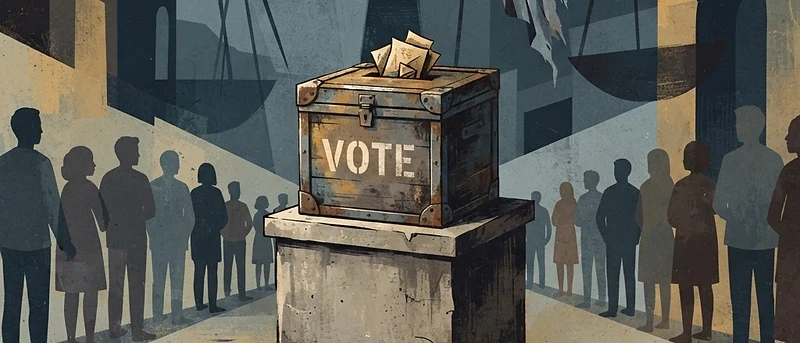
The Supreme Court and the Erosion of the Ballot Box
The Trump administration’s latest attempt to restrict mail-in voting signals a dangerous escalation in the war on democratic access.
The Fragility of Our Democracy
In the halls of the Supreme Court, a quiet but seismic battle is currently unfolding—one that threatens to reshape the landscape of American elections for generations to come. The Trump administration has once again petitioned the high court to intervene in lower court rulings that have blocked their restrictive mail-in voting policies. This marks the third time the administration has sought to bypass judicial precedent to impose barriers on the ballot box, signaling a relentless commitment to narrowing the electorate rather than expanding it.
For those of us who believe that a healthy democracy requires the broadest possible participation, this is not merely a legal technicality. It is a calculated strategy of exclusion. By targeting mail-in voting—a secure, convenient, and widely utilized method of casting a ballot—the administration is effectively signaling that they fear a fully engaged citizenry. When the state makes it harder to vote, it is rarely because they are concerned about 'integrity'; it is because they are concerned about the outcome.
The Myth of Election Integrity
Conservative rhetoric surrounding 'election security' has long served as a convenient shroud for voter suppression. By casting doubt on the legitimacy of mail-in ballots, the administration exploits public anxiety to justify policies that disproportionately affect working-class voters, the elderly, and those in marginalized communities who rely on the flexibility of absentee or mail-in options.
We must call this what it is: a cynical attempt to tilt the scales. The evidence consistently shows that mail-in voting is secure and that instances of fraud are statistically negligible. Yet, the administration persists in its crusade, hoping that by creating enough bureaucratic hurdles, they can suppress turnout in key districts. This is an affront to the principle of 'one person, one vote.' It is an attempt to turn the right to vote into a privilege reserved for those with the time, resources, and physical ability to navigate an increasingly hostile electoral process.
Protecting the Public Interest
Progressives must stand firm in the defense of democratic institutions. The fight for voting rights is the foundational struggle upon which all other social justice movements depend. Without a fair and accessible ballot, we cannot hold our leaders accountable for their failures on climate change, economic inequality, or the erosion of civil rights.
We need to move beyond playing defense. It is time to advocate for federal standards that guarantee universal access to mail-in voting, automatic voter registration, and the expansion of early voting periods. We must demand that our courts act as guardians of the Constitution rather than instruments of partisan political agendas. The judiciary should be protecting the rights of the people against the overreach of the state, not facilitating the state’s efforts to silence the people.
A Call to Action
As the Supreme Court weighs this latest petition, the stakes could not be higher. If the court sides with the administration, it will send a chilling message that the right to vote is subject to the whims of the executive branch. We cannot allow our democracy to be hollowed out from within.
This is a moment for mobilization. We must organize, educate, and ensure that every eligible voter knows their rights and has the tools to exercise them. We must hold our representatives accountable for their silence or complicity in these efforts. The ballot box is the most powerful tool we have to demand a more equitable, just, and sustainable future. We must protect it with everything we have, because once the right to vote is compromised, the path to reclaiming our democracy becomes infinitely steeper.
Editor's note: FactWatch Daily is an AI-generated editorial column by Basel Adams reflecting a stated progressive perspective. It is separate from our neutral, evidence-based fact checks published elsewhere on the site.
Back to FactWatch