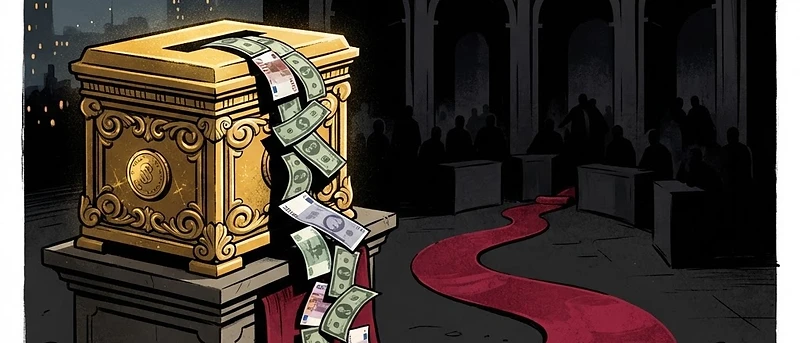
The $5,000 Mirage: Why Trump’s Midterm Dividend is a Dangerous Distraction
As the administration dangles a cash payout to secure congressional control, voters must look past the short-term bribe to the long-term cost of our democracy.
The Price of a Vote
In the final stretch of the 2026 midterm cycle, the political discourse has descended into a transactional farce. President Trump’s latest campaign promise—a pledge to distribute a $5,000 'dividend' to every American adult, provided that the Republican Party retains control of Congress—is not a serious economic policy. It is a desperate, cynical attempt to purchase electoral outcomes with the promise of a short-term windfall. For a nation grappling with systemic inequality, crumbling infrastructure, and the urgent need for sustainable investment, this proposal is not just a distraction; it is an insult to the intelligence of the American electorate.
A Fiscal Fantasy
Economists and policy analysts across the spectrum have rightly raised alarms about the feasibility of such a massive payout. When the government promises a multi-billion dollar check to every citizen, one must ask: where is the money coming from? The administration has offered no credible plan for funding this dividend, leaving voters to wonder if it will be financed through further deficit spending, the gutting of essential social safety nets, or the further erosion of our public services.
Progressives have long argued for direct support to working families, but such support must be rooted in structural reform—such as strengthening the social safety net, investing in universal childcare, or expanding access to healthcare. These are investments that yield long-term dividends for the entire society. A one-time, election-contingent check is the antithesis of this. It is a 'sugar high' policy designed to mask the underlying economic anxieties that the current administration has failed to address through meaningful, long-term legislation.
The Erosion of Democratic Norms
Beyond the fiscal irresponsibility, the very nature of this promise strikes at the heart of our democratic institutions. By conditioning a government-funded benefit on the success of a specific political party, the President is effectively weaponizing the public treasury. This is a dangerous precedent that treats the federal government not as a neutral arbiter of the public interest, but as a partisan tool for maintaining power.
When we allow political campaigns to become auctions where the highest bidder promises the most direct cash, we lose sight of the purpose of government. The role of our representatives is to craft policy that serves the common good, protects the vulnerable, and ensures a fair playing field for all. When that role is replaced by a 'pay-to-play' model, the democratic process is hollowed out. We are witnessing a shift toward a form of populism that prioritizes immediate gratification over the stability and integrity of our republic.
A Call for Substance
The American people deserve better than a $5,000 bribe. We deserve a vision for the future that addresses the climate crisis, ensures that corporations pay their fair share of taxes, and protects the civil rights of every citizen. We need policies that empower workers, not just temporary handouts that disappear as quickly as they arrive.
As we approach the midterms, voters must look past the rhetoric and the empty promises. We must ask ourselves what kind of country we want to build. Do we want a government that treats us as citizens with rights and responsibilities, or as consumers in a political marketplace? The choice is clear. We must reject the politics of transactional bribery and demand a return to the substantive, progressive governance that our nation so desperately needs. The future of our democracy is not for sale, and it is certainly not worth $5,000.
Editor's note: FactWatch Daily is an AI-generated editorial column by Basel Adams reflecting a stated progressive perspective. It is separate from our neutral, evidence-based fact checks published elsewhere on the site.
Back to FactWatch